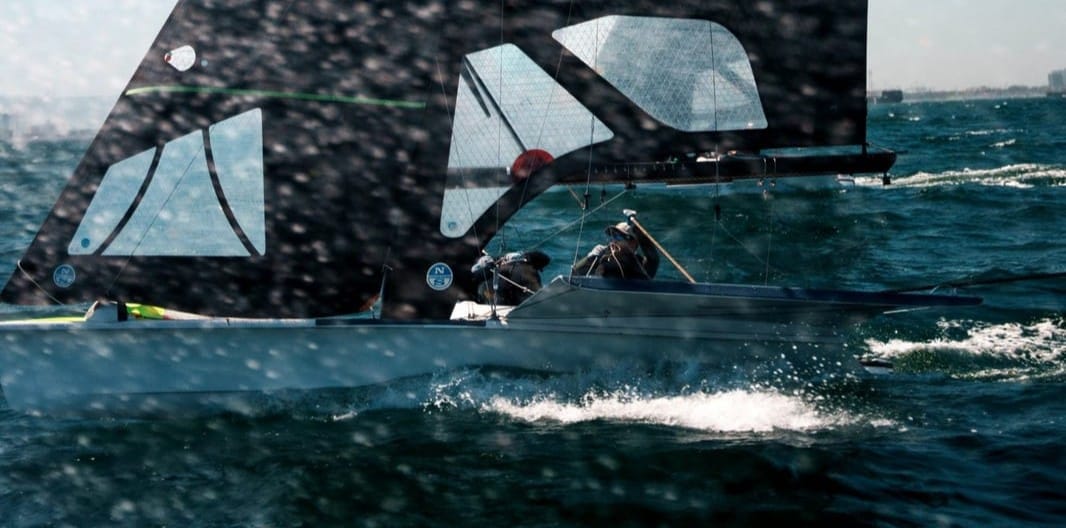
After a month bouncing between training camps and competition in Palma, we're back home in Long Beach with some serious insights about where we stand in this Olympic campaign.
Winter Training Pays Off
This winter, we committed fully to the "year two" philosophy that our coach Willie has always preached: boat speed, boat speed, boat speed. While it might sound simple, developing speed in the 49er is incredibly complex—we're constantly switching between different modes and gears depending on conditions.
We spent our winter training alongside some of the world's best teams in Cadiz and Vilamoura. Working with the Swedish and Dutch squads gave us the perfect training partners—crews that were consistently faster than us, which is exactly what you want when you're trying to improve. We shared everything: settings, techniques, even swapped boats to understand different sensations and feelings on the water.
The Dutch connection has been particularly special. It started when Willie reached out to Floris van der Werken, a three-time 49er world champion, and somehow convinced him to coach us. Turns out he loves America! The Dutch sailors are incredibly welcoming and refreshingly direct—they tell you exactly what you need to hear, when you need to hear it.
Palma: A Reality Check
Palma served as our benchmark event—the first time the entire international fleet comes together after winter training. With nearly 100 boats and all the Olympic classes present, it's where you put your money where your mouth is.
The good news? Our speed work is paying off. In training sessions with top Austrian and Dutch teams before the regatta, we were holding our own in multiple conditions. We started the event strong and maintained good pace throughout.
The challenging news? This was the first major 49er event using Vakaros RaceSense technology, and it completely changed starting dynamics. Without being able to see the line ends in tight packs, sailors had to rely on precise positioning rather than visual judgment. The first start had 18 boats over the line—and that wasn't unusual for the week. We had to completely rethink our starting approach.
Adapting and Moving Forward
We've just completed a five-day camp here in Long Beach focused on speed work and—crucially—starting practice. Every day ended with an hour of start sequences on the biggest line we could set, learning to "ping" the line without relying on distance-to-line displays.
This is what we love about sailing at this level: just when you think you've mastered something, the sport evolves. The Vakaros system is here to stay, so we're adapting our training to match.
What's Next
Our next major check-in is Worlds in Hyères this May, followed by the San Pedro OCR in late July. Between now and then, we're hosting some incredible training partners: a top Polish team in June and a Gold Fleet Swedish team for the entire month leading up to San Pedro.
Nothing fancy—just heads down, logging hours on the water and in the gym while we're based in one spot. We're trusting the process, knowing that this methodical approach to speed development is what separates good campaigns from great ones.
With two years until the Olympics come to our home waters in San Pedro, every training session matters.
Thanks for following along on this journey—there's so much more to come.